Andra Lutu
Senior Researcher
Abstract
In recent years, we have witnessed numerous emerging types of virtual operators, which exploit the radio coverage footprint of a handful of base operators to provide world-wide mobile connectivity. These global operators reap the benefits of network softwarization and virtualization, including eSIM technology or control/data-plane separation in 5G networks. In this talk, we’ll take a deeper look into the opaque cellular ecosystem, and the underlying interconnection dynamics that enable global operators to… operate. We will learn about the IP eXchange (IPX) Network, and how by interconnecting 800 Mobile Network Operators (MNOs) worldwide it enabled the advent of Mobile Network Aggregator (MNA), including the likes of Google Fi, Airalo or Twilio/KORE. We will shed light on the structure of the IPX Network as well as on the temporal, structural and geographic features of the IPX traffic. Our results are a first step to fully understand the global mobile Internet, especially since it now represents a pivotal part in connecting IoT devices and digital nomads all over the world. Finally, we discuss the different MNA models, the limitations of current “global” operators on the market that leverage the IPX Network, and how we envision the next generation global operator model.About the speaker
 Andra Lutu is a principal researcher, tech lead and organization manager at Telefónica. With more than 10 years of post-PhD experience, her focus is on mobile network architecture design and implementation, integrating machine learning applications in the telco ecosystem. She has authored more than 70 articles in top venues, such as ACM Sigcomm, ACM MobiCom, ACM Infocom, ACM IMC, ACM CoNext, IEEE TNSM and IEEE TNET. She has contributed to numerous European projects, including SNS-JU ORIGAMI, H2020 DAEMON, H2020 MONROE, and she was a Marie Curie fellow in 2019/20. She currently manages a team of post-doctoral researchers and focuses to fosters international research collaborations with labs both in academia and in the industry.
Edward W. Knightly
Professor of Electrical and Computer Engineering
Abstract
Extremely Large Scale Antenna Arrays (ELSAAs) enable two unique features: an extended effective Fraunhofer range (near field) up to kilometer scale and the ability to shape incoming and outgoing wavefronts with high precision. In this talk, I will describe new ELSAA applications in wireless networking, sensing, and security, including both theoretical foundations and experimental demonstrations. I will focus on high-resolution sensing around obstacles and spoofing radars as two illustrative scenarios.About the speaker
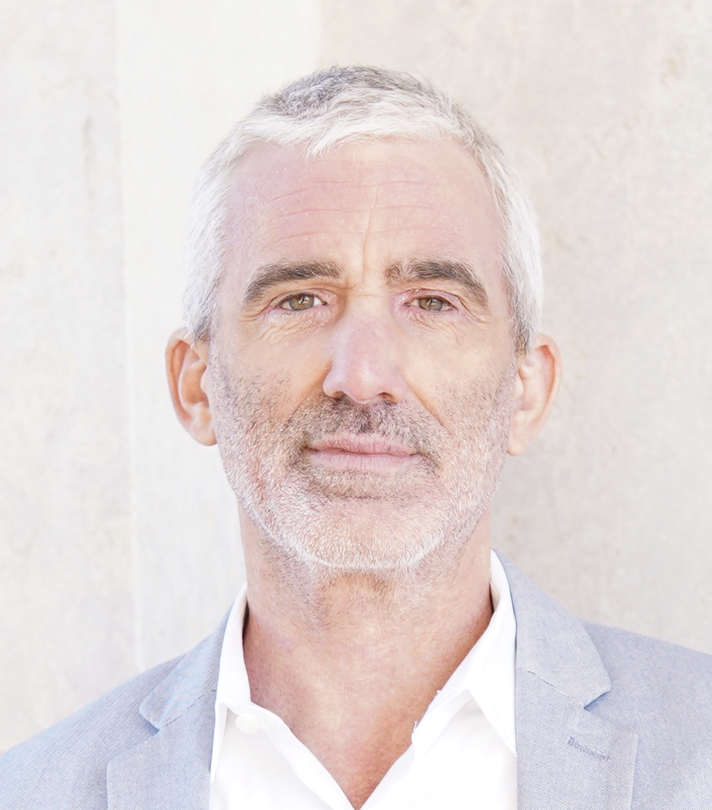 Edward Knightly is the Sheafor–LindsayProfessor of Electrical and Computer Engineering and Computer Science at Rice University. He received his Ph.D. and M.S. from the University of California at Berkeley and his B.S. from Auburn University. He is an ACM Fellow, an IEEE Fellow, and a Sloan Fellow. He received the IEEE INFOCOM Achievement Award, the Dynamic Spectrum Alliance Award for Research on New Opportunities for Dynamic Spectrum Access, the George R. Brown School of Engineering Teaching + Research Excellence Award, and the National Science Foundation CAREER Award. He won eight best paper awards including ACM MobiCom, ACM MobiHoc, IEEE Communications and Network Security, and IEEE INFOCOM.
György Dán
Professor in Teletraffic Systems
Abstract
The commercial success of edge computing hinges on the ability to allocate and price computational resources efficiently while meeting stringent service latency requirements. Many edge applications are expected to contain machine learning (ML) components, yet our understanding of the interference between co-located ML workloads, often referred to as the noisy neighbors problem, and its impact on how to orchestrate applications under latency constraints is rather limited. In this talk we address this problem from two complementary perspectives, resource management and pricing. We first discuss the problem of profiling the inference time of ML applications for energy aware service orchestration. We introduce a lightweight, data-driven framework, and show how it can be used for scalable placement and resource management decisions, balancing latency guarantees with energy efficiency. We then turn to the problem of pricing in multi-tenant edge environments, formulated as a game among network operators, service providers, and autonomous, price sensitive users, where contention among workloads potentially affects performance. We show how a model-assisted learning approach can be used by the operator for learning a near-optimal pricing policy under resource and latency constraints. We posit that combining data driven performance modeling, optimization, and learning, as discussed in this talk, could enable more sustainable, economically viable edge systems that adapt intelligently to contention, latency, and energy constraints.About the speaker
 György Dán is professor of teletraffic systems at KTH Royal Institute of Technology, Stockholm, Sweden. He received the M.Sc. in computer engineering from the Budapest University of Technology and Economics, Hungary in 1999, the M.Sc. in business administration from the Corvinus University of Budapest, Hungary in 2003, and the PhD in Telecommunications from KTH in 2006. He worked as a consultant in the field of access networks, streaming media and videoconferencing 1999-2001. He was a visiting researcher at the Swedish Institute of Computer Science in 2008, a Fulbright research scholar at University of Illinois at Urbana-Champaign in 2012-2013, and an invited professor at EPFL in 2014-2015. He served as area editor of Computer Communications 2014-2021, as editor of IEEE Transactions on Mobile Computing 2019-2023, serves on the TPC of conferences like IEEE Infocom, ACM e-Energy, IJCAI, AAAI, and is vice-chair of the steering committee of IEEE SmartGridComm. He has received several best paper awards from IFIP and IEEE in recent years. His research interests include the design and analysis of mobile computing systems, game theoretical models of networked systems, and cyber-physical system security and resilience.
Massimo Neri
Chief Technology Officer
Abstract
European collaborative R&D projects are designed to bridge academic research and industrial innovation. The intention is right; the structural execution often isn't. Drawing on direct experience across 17+ Horizon Europe projects, this intervention offers an honest industry perspective on where the academy-industry collaboration model falls short and, critically, where it works and why. Rather than a formal presentation, the session is designed as an unfiltered exchange of views, using concrete observations to challenge assumptions on both sides and open a practical discussion about what better collaboration actually looks like. Key themes: siloed project execution (and how to break it), the evolving role of academia across TRL stages, open data beyond compliance, navigating vertical and blue-sky funding, and the question of who leads research direction and when.About the speaker
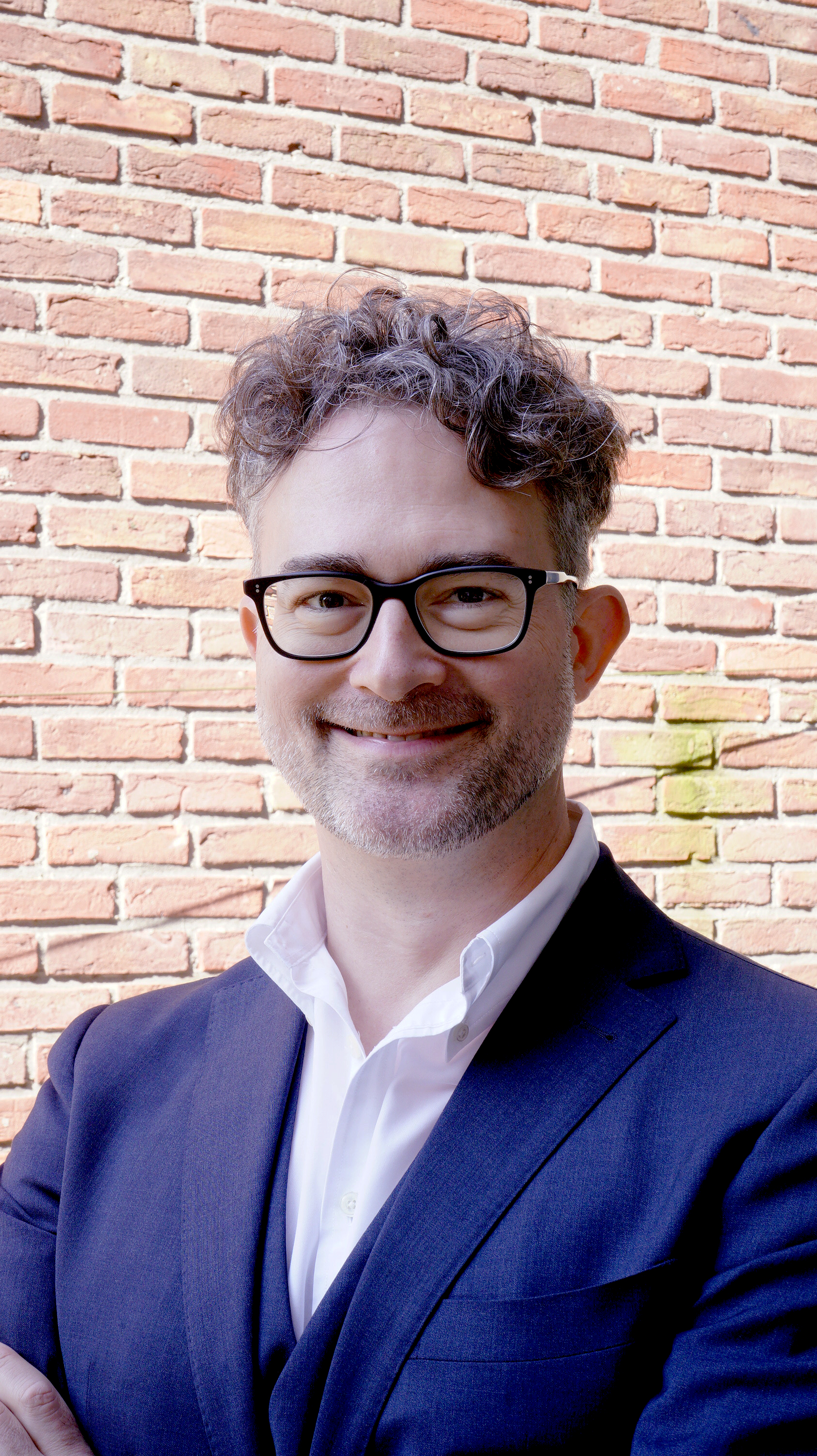 Dr. Massimo Neri is Martel's Chief Technology Officer and Head of Lab, responsible for leading company-wide technological choices and strategy. He has also been a one6G board member since 2023.
Over the years, Massimo has developed comprehensive technical leadership experience. This includes owning and managing an Italian SME for more than 10 years, where he led the delivery of cloud, IoT, and mobile software projects to enterprises and start-ups. Massimo has served as the scientific and technical coordinator for multiple EC and ESA projects focusing on satellite communications and smart applications. He has authored more than 40 peer-reviewed publications, including journal papers, book chapter contributions, and articles in international conference proceedings.
Massimo holds a Ph.D. in Telecommunication Engineering from the University of Bologna and an Executive MBA from the SDA Bocconi School of Management in Milan. Earlier in his career, he was a Research Associate for the LTE standardization group at Qualcomm Inc. in San Diego.
Dr. Massimo Neri is Martel's Chief Technology Officer and Head of Lab, responsible for leading company-wide technological choices and strategy. He has also been a one6G board member since 2023.
Over the years, Massimo has developed comprehensive technical leadership experience. This includes owning and managing an Italian SME for more than 10 years, where he led the delivery of cloud, IoT, and mobile software projects to enterprises and start-ups. Massimo has served as the scientific and technical coordinator for multiple EC and ESA projects focusing on satellite communications and smart applications. He has authored more than 40 peer-reviewed publications, including journal papers, book chapter contributions, and articles in international conference proceedings.
Massimo holds a Ph.D. in Telecommunication Engineering from the University of Bologna and an Executive MBA from the SDA Bocconi School of Management in Milan. Earlier in his career, he was a Research Associate for the LTE standardization group at Qualcomm Inc. in San Diego.